Guides
YouTube Lecture Notes Generator
Generated notes solve the wrong half of the problem. Capture was never the hard part of studying — remembering was.

It is worth being honest about what generated notes are, because the honest version is still useful and the overclaimed version leads students into a genuine problem.
Generated notes are a complete, structured record of what a lecture said, produced in about a minute. They are not a substitute for having engaged with the material, and the research on this is not ambiguous — which is the central point of studying from video properly.
The part that is genuinely solved
Transcription-by-hand is a real cost and it was never the valuable part. A two-hour recorded lecture takes roughly three hours to write up properly, and most of that is typing things down that you understood the first time.
Generated notes eliminate that. You get every topic covered, in order, with timestamps, without spending the afternoon. For a module with twenty recorded lectures, that is a term's worth of hours back.
What you have at the end is a complete reference document. It is excellent for finding things, checking whether a topic was covered, and orienting before a seminar.

The part that is not solved, and cannot be
Retrieval practice — being made to recall something rather than re-reading it — is one of the better-replicated findings in learning research. The Institute of Education Sciences practice guide on organising instruction for learning recommends spacing and retrieval as core techniques, and re-reading a complete set of notes is neither.
A document that already contains every answer gives you nothing to retrieve. It produces the sensation of knowing the material — everything looks familiar — with none of the effort that creates durable memory.
This is the failure mode worth naming plainly: a student with perfect generated notes who re-reads them five times before an exam has done five hours of work and very little learning.
| Task | Generated notes | Still yours to do |
|---|---|---|
| Recording what was said | Fully | — |
| Finding a topic later | Fully | — |
| Structuring the material | Mostly | Reorganising to your syllabus |
| Understanding it | Not at all | All of it |
| Remembering it | Not at all | Retrieval and spacing |
| Knowing what you missed | Partly | Checking against the syllabus |

Turning a record into revision material
The bridge between the two columns is one step that takes twenty minutes and is the only step that matters.
Take the generated notes and convert each section into a question. "Mitochondrial electron transport produces ATP via a proton gradient" becomes "how does the electron transport chain produce ATP?" — same content, now something you have to answer rather than read.
Do that once, close the notes, and answer from memory. Where you cannot, the timestamp takes you to the lecturer explaining it. That loop is retrieval practice with the source attached, and it is what the generated document makes possible rather than what it does for you.
Twenty minutes of question-writing beats three hours of transcription and five re-reads, which is the whole argument for using the generator at all.
Should you stop taking notes in the lecture?
The obvious conclusion — the generator handles it, so stop writing — is wrong, and for an interesting reason.
Note-taking is not only capture. Deciding what is worth writing down requires judging importance in real time, and that judgement is itself a form of processing the material. A student who writes nothing is a student who has not decided anything about what they are hearing.
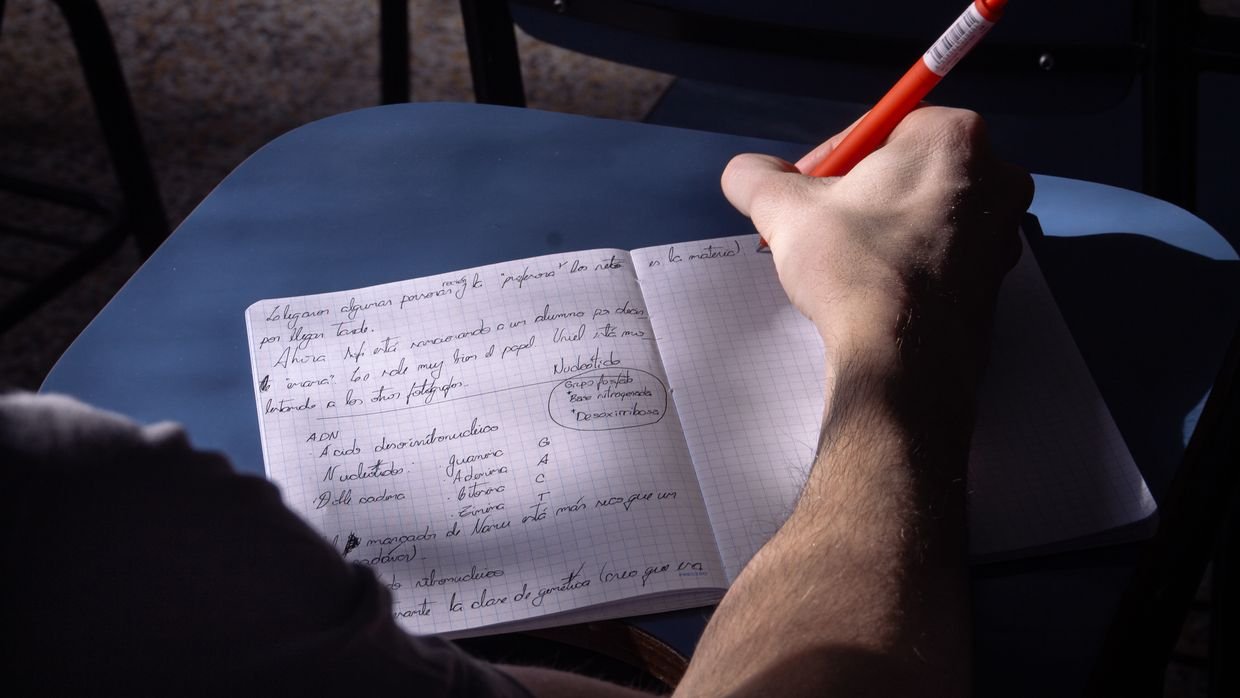
What the generator changes is what your own notes should contain. Since the record is handled, there is no reason to transcribe. What is worth writing is the part no generator produces: the question you could not answer, the connection to last week's lecture, the sentence you did not follow.
Those three categories are a better set of notes than a complete transcription ever was, and they take a fraction of the effort. The generated document then sits underneath as the reference your own notes point into.
What lectures do to the output
Recorded lectures have characteristics that affect the notes in ways worth anticipating.
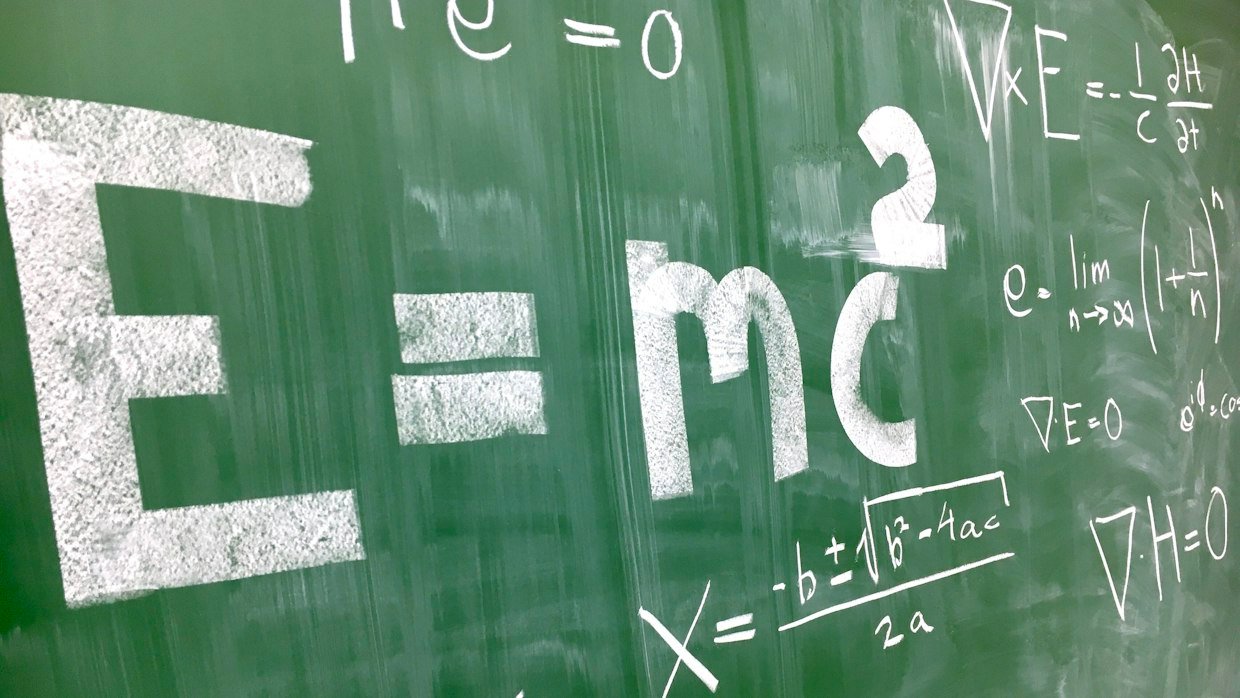
Board work vanishes. A maths lecture is derivations on a board with "and then we substitute here" spoken over them. The notes will have the narration and none of the mathematics. For technical subjects, the slides or your own board notes remain essential.
Digressions get compressed. The fifteen-minute tangent about exam technique may be summarised in a line, which is usually correct and occasionally loses something that mattered.
Emphasis is invisible. "This will be on the exam" carries no more weight in a transcript than any other sentence.
A workflow for a module
- Generate notes after each lecture, not in a panic in week eleven.
- Add what the board had — diagrams, derivations, worked examples — from the slides.
- Write questions from each section the same week.
- Answer them from memory a week later, then a month later.
- Use timestamps for anything you cannot answer rather than re-reading the whole thing.
- Check the set against the syllabus before the exam to find topics no lecture covered.
Step six catches the gap nobody notices: material on the syllabus that was assigned as reading and never lectured, which generated notes cannot know is missing.

Where this helps most
Two situations where generated lecture notes are worth more than the general case, and both are about access rather than convenience.
Lectures in a second language. Following a fast lecturer in a language you are still learning consumes all your attention on comprehension, leaving none for the material. A text record you can read at your own pace, alongside the recording, removes that trade-off entirely.
Anything that affects note-taking directly. Students who cannot write quickly, cannot write and listen at once, or need to replay passages are poorly served by a format that runs at a fixed speed once. A complete text record with timestamps is a genuinely different level of access to the same lecture.
In both cases the argument is not that the notes replace engagement. It is that they remove a barrier sitting in front of the engagement, which is a better thing for them to do than saving anyone an afternoon of typing.
Frequently asked questions
Are generated notes good enough to revise from?
As a reference, yes. As revision material, not on their own — re-reading a complete document creates familiarity rather than recall. Convert sections into questions first.
Will it capture diagrams and equations from the board?
No. Notes come from what was spoken, and board work is visual. For maths and science lectures you still need the slides or your own written notes.
Should I stop taking notes in lectures?
Taking notes is itself a form of engagement, so the useful change is taking fewer, more selective notes — your own questions and confusions — and letting the generator handle the record.
How does this differ from summarizing the lecture?
Notes aim to be complete and structured; a summary aims to be short. Use notes for a module you are studying and a summary for a lecture you are only checking.
Skip the typing, keep the studying
Generate the record in a minute, then spend twenty turning it into questions.
Generate notes — free