Guides
YouTube Flashcard Generator
Not a feature here. Tools that generate decks exist — but writing the question is where most of the learning happens, which makes this an odd thing to automate.

This produces summaries and notes, not decks. If a generated deck is what you want, tools that publish it as a feature are the place to go and this page will not pretend otherwise.
What follows is the argument for doing the last step yourself, because on this particular feature the evidence is unusually one-sided.
Why flashcards work at all
Not because of repetition. Because of retrieval — being made to produce an answer from memory rather than recognising one on a page.
That mechanism is one of the better-replicated findings in learning research. The Institute of Education Sciences practice guide on organising instruction puts spacing and retrieval practice at the centre of what actually produces durable learning, ahead of re-reading and highlighting.
So a flashcard is only working if it makes you retrieve. A card you can answer by recognising a phrase is not testing anything, and that distinction is decided entirely by how the question was written.

What generated cards tend to look like
| Generated from the transcript | Written by you | |
|---|---|---|
| Front | "The electron transport chain produces ___ via a proton gradient" | "Why does the cell bother with a gradient rather than making ATP directly?" |
| Tests | Recognition of a phrase | Whether you understood the mechanism |
| Passable by | Remembering the sentence | Only by understanding |
| Required, to write | Nothing | Deciding what the hard part is |
The bottom row is the whole argument. Writing the second card requires you to work out what the difficult idea is — and having worked that out, you have done most of the learning before the card is ever reviewed.
Generation is very good at the first kind, because a transcript is full of sentences that can be turned into gaps. It is bad at the second kind, because it does not know what you find hard.

Twenty minutes, from a summary
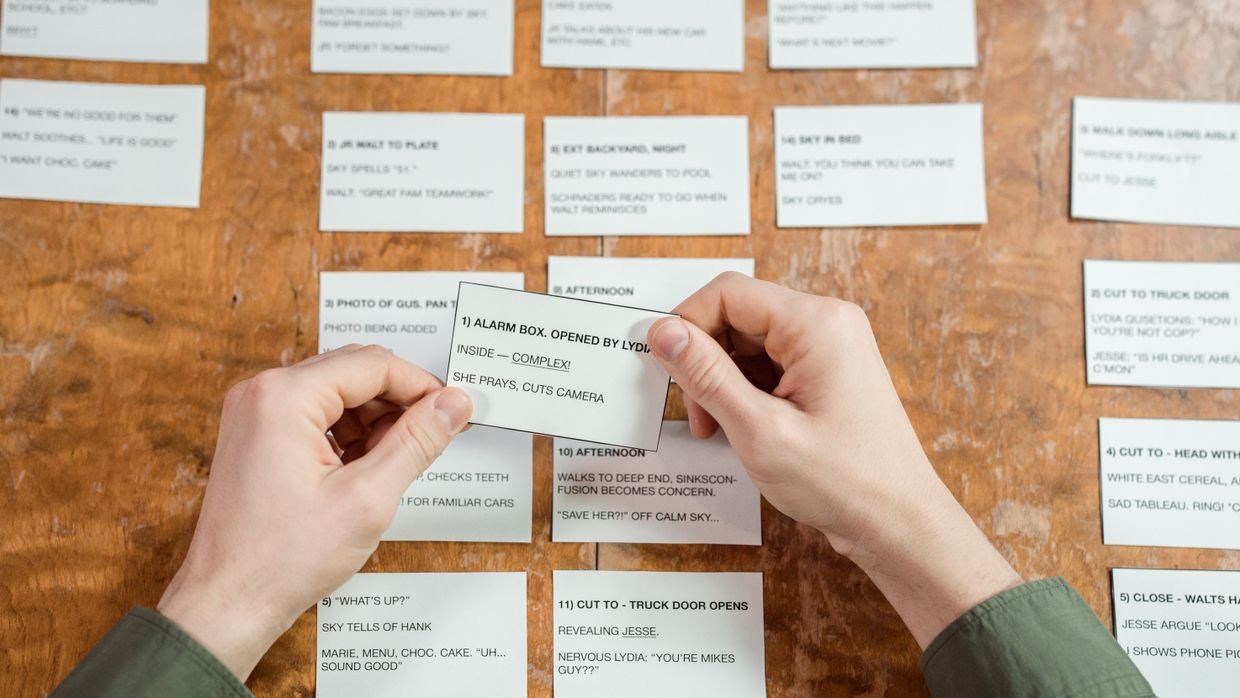
- Generate notes for the lecture. That removes the transcription work, which genuinely was a waste of your time.
- Read a section and close it.
- Write the question you could not answer. Not a question about the section — the one you personally got stuck on.
- Keep the answer short. A card with a paragraph on the back is a re-reading exercise.
- Put the timestamp on the card. When a card stops making sense in a month, you can go back to the lecturer saying it.
- Stop at fifteen cards per lecture. Fifty cards you stop reviewing are worth nothing.
Step five is worth doing even though nobody does it. The failure mode of any deck is a card you no longer understand, and a link back to the source fixes it in ten seconds instead of prompting you to delete the card.
The honest case for generating them
A page that only argued one side would be doing the same thing it is criticising.
Volume of factual material. Vocabulary, anatomy, drug names, dates, statutes. Where the content genuinely is recall of discrete facts, a generated deck is fine and writing two hundred cards by hand is a poor use of an evening.
Getting started at all. A generated deck you review beats a hand-written deck you never make. If the alternative is nothing, take the deck.
As raw material. Generate, then rewrite the cards that are testing recognition. The editing is the thinking, and it is faster than starting blank.
What does not work is generating a deck, reviewing it until the cards feel familiar, and concluding you know the subject. Familiarity is exactly the sensation that retrieval practice is supposed to defeat.
What a card from a video cannot contain
The standing limit, which matters more for cards than for most outputs.
Everything here comes from the caption track. A card generated from a lecture cannot contain the diagram, the derivation on the board, or the worked example — which on technical subjects is most of what you needed to learn.
Worse, a caption error becomes a card. A misheard figure or a mangled name, reviewed twenty times on a schedule designed to make things stick, is a wrong fact you have deliberately memorised. If you generate cards, check them against the source before the first review rather than after.

Getting them into a review system
Cards only do anything if you see them on a schedule, which means a spaced-repetition tool rather than a document.
The mechanics are simpler than people expect — most systems import plain text with the front and back separated by a tab, so a two-column list is already a deck. Getting a summary into Anki covers the format and the one habit worth adopting: putting the video timestamp on the back of every card.
That habit matters because of what happens in month two. You will meet a card you no longer understand, and without a route back to the source the usual response is to delete it. A timestamp turns that into ten seconds of listening.
It is also the only thing that makes a generated card recoverable. If a deck contains a misheard figure, the timestamp is how you find out — and reviewing a wrong fact on a schedule designed to make things stick is the worst outcome available here.
Where this fits in a term
The timing matters as much as the method, and it is where most decks go wrong.
Cards written the same week as the lecture are cards written while you still remember what confused you — which is the information the whole exercise depends on. Cards written in the revision period are written from the notes alone, and by then you cannot tell which parts were hard because all of it looks equally unfamiliar.
So the sustainable pattern is small and immediate: generate the notes after each lecture, spend twenty minutes writing questions that week, and let the review schedule do the rest. That spreads the effort across a term instead of concentrating it where there is no time for it.
Frequently asked questions
Does this generate flashcards?
No. It produces summaries and structured notes. Tools that generate decks exist and publish it as a feature — if that is what you need, use one of those.
Are generated flashcards worse?
They tend to test recognition of a phrase rather than understanding, because a transcript sentence turned into a gap is easy to produce. Writing the question yourself requires deciding what the hard part is, which is most of the learning.
When is generating a deck the right call?
For large volumes of discrete facts — vocabulary, anatomy, dates — and whenever the alternative is making no deck at all. Also as raw material you then rewrite, since the editing is the thinking.
What is the risk with cards made from a video?
A caption error becomes a card you then memorise on purpose. Check generated cards against the source before the first review, and remember that anything drawn on a board is not in the transcript at all.
Generate the notes, write the questions
Skip the transcription. Keep the part that decides what you actually learn.
Generate notes — free