Guides
YouTube Video to Notes
Sections, supporting detail, and a timestamp on every claim — in about thirty seconds. The question worth asking first is what you intend the notes to do, because that changes whether they help.
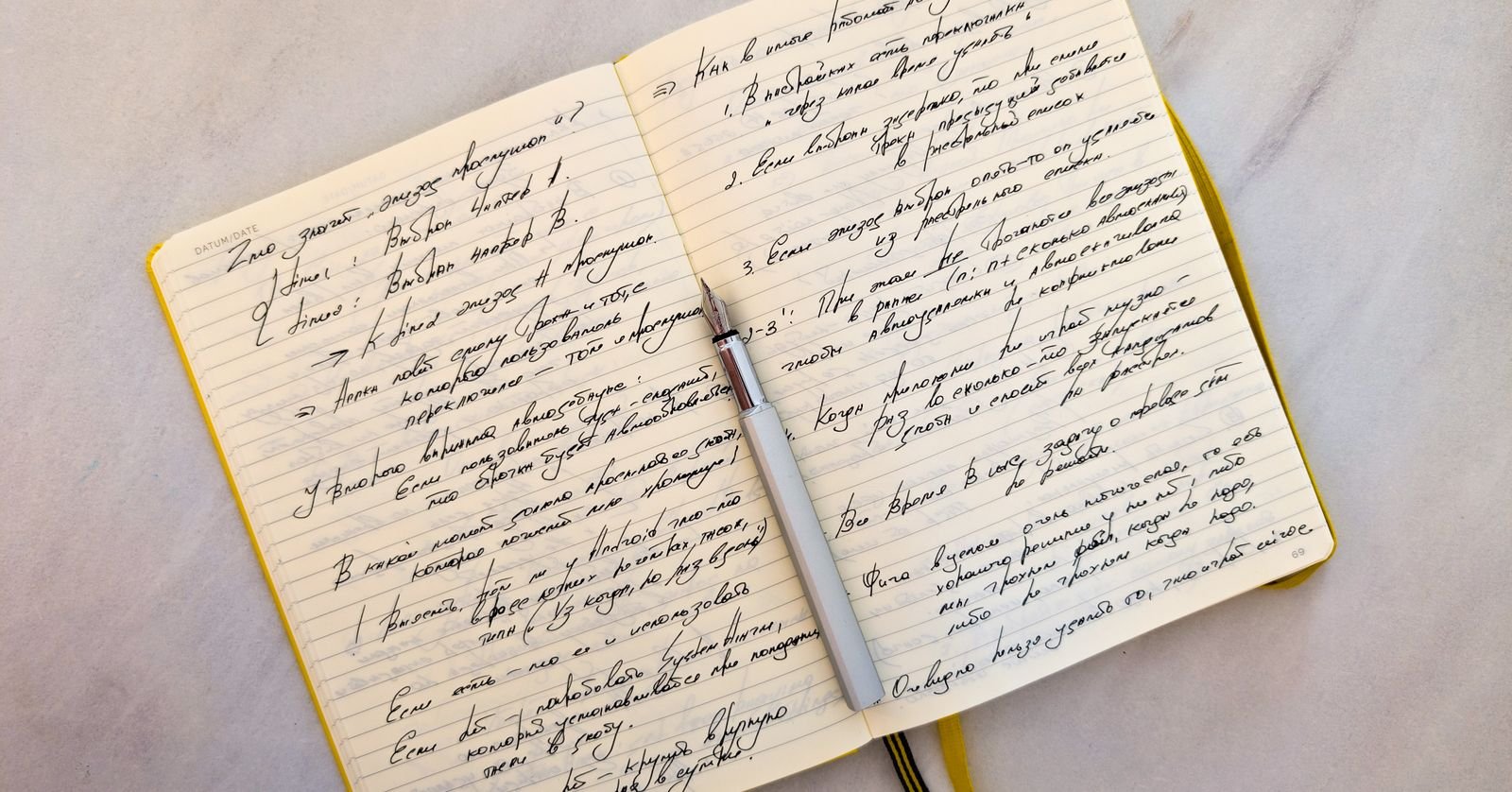
Notes serve two completely different purposes, and people reach for the same tool for both without noticing they have done it. One of those uses works extremely well. The other quietly removes the thing that was doing the work.
Worth separating them before you build a habit, because from the outside the two look identical.
Notes as a record, notes as a process
As a record, notes exist so a thing can be found again. Here generated notes are simply better than yours: more complete, better structured, produced in seconds, and searchable next year.
As a process, notes exist because writing them forces you to decide what matters and put it in your own words. That decision is the learning.
Generated notes do the first job and skip the second entirely. That is fine when you wanted a record. It is a problem when you wanted to understand something and mistook the document for the understanding.
| What you want | Generated notes | Your own notes |
|---|---|---|
| Find a moment months later | Much better | Depends what you wrote |
| Cover a video you skimmed | Much better | Nothing to cover it |
| Share with a colleague | Much better | Usually unreadable |
| Remember it next month | Little effect | Much better |
| Find out what you misunderstood | None | The only thing that does |
What ends up in the notes
The notes generator rebuilds structure from the content rather than from uploader chapters, which most videos do not have. Under each section, the claims made in it, with the supporting detail that qualified them.
Every claim carries the second it came from, as a clickable link. That is what turns notes into something you can check rather than something you have to trust, months after you have forgotten the video.
Four depths come out of one pass, so the same video gives you a one-line reminder or full structured notes without running anything twice.
Export is not a detail
Notes that cannot leave the page are notes you will retype. Export is Markdown, which pastes cleanly into Notion, Obsidian, Bear, Apple Notes and anything else that accepts text.
The important part is that the timestamp links survive the move. Notes that lose their links become unverifiable at exactly the point you have forgotten enough to need checking.
Export immediately rather than later. Without an account there is no history to return to, and the commonest way people lose a summary is closing the tab meaning to save it afterwards.

The workflow that uses both kinds
The ordering is the part people get wrong. Generating first and recalling second feels efficient and removes the whole benefit — once you have read the structure, you can no longer discover what you failed to reconstruct.
- Watch once without notes. Splitting attention between understanding and transcribing means transcribing wins.
- Write the outline from memory. Uncomfortable, and the discomfort is the diagnostic.
- Generate the notes and compare. The difference is your gap list, each gap with a timestamp.
- Rewatch only those minutes, then write each gap in your own words underneath the generated version.
The UNC Learning Center's guidance on effective note-taking makes the same structural point: the value comes from reviewing and reworking notes rather than from capturing them.

Some videos convert better than others
The variation is larger than people expect, and it is a property of the video rather than the tool.
Structured talks — lectures, conference sessions, explainers — convert best, because the speaker worked from an outline and the transcript carries it.
Interviews give good topic maps and weaker notes, since the structure is associative: threads open, get dropped, and return later without acknowledgement.
Demonstrations convert worst. A tutorial whose content is on screen produces a transcript of someone saying "and then we click here", which summarises to very little.
Notes you will still understand in March
There is a specific failure mode with generated notes that only shows up months later: they are comprehensive and completely unmemorable.
Your own notes are full of hooks — the odd phrasing you used, the thing you underlined twice, the question you scribbled in the margin. Those hooks are what make a note retrieve the memory of understanding it.
Generated notes have none. They are someone else's clean prose about a video you watched, and reading them back feels like reading about a topic rather than remembering it. That is why the annotation step matters more than the generation step.
The practical fix costs two minutes per video: after generating, add one sentence in your own words under each section you actually care about. That sentence is the hook, and the generated structure around it is the index.

What to keep and what to throw away
Generated notes are cheap, which makes it tempting to keep all of them. A folder of two hundred auto-generated documents is an archive nobody searches.
Keep the ones you annotated — where you added your own explanation of the part that did not land, in the way a lecture gap list works. Those will mean something to you in three months, because they contain something you produced.
For everything else the video still exists and regenerating takes thirty seconds. Storage is not the constraint; finding things later is.
One video, one decision
Before generating, decide which job you want: a record, or understanding. The answer changes the whole workflow and takes a second to settle.
If it is a record, generate, export, move on — you are done in thirty seconds and the notes will serve you fine in six months. If it is understanding, write your own outline first and treat the generated version as the answer key.
The failure everyone makes is not choosing, generating notes by reflex, and assuming the second job was handled because the first one was.
Frequently asked questions
What format do the notes come in?
Markdown, with headings, nested detail and timestamp links. It pastes directly into Notion, Obsidian and most note apps without reformatting.
Can I choose how detailed the notes are?
Four depths from a single run, from one line to full structured notes. Switching between them is instant and does not count as another summary.
Will generated notes help me remember the material?
On their own, not much — reading produces familiarity rather than recall. They are very good at telling you what to practise recalling, which is a different and genuinely useful job.
Do the notes include things shown on screen?
Only if they were spoken. Text, code and settings shown but never read aloud are not in the transcript, so they cannot appear in the notes — open the timestamp and read them off the video.
Is there a limit on video length for notes?
No fixed ceiling. Long videos are read in overlapping passes rather than truncated; check the last timestamp against the runtime if you want to confirm the ending was covered.
Turn this week's video into notes
Write what you remember first, then generate the notes and work the difference.
Generate notes — free