Guides
YouTube Summarizer for High School Students
School work has a different shape to university: someone tells you what to learn, the videos are short, and the exam is specific. That changes what a summarizer is actually good for.

Most study advice, including ours, is written for people with ninety-minute lectures and no syllabus. School is the opposite: fifteen-minute explainer videos, a defined specification, and an exam that asks specific things.
That makes summarising useful in a narrower way than you might expect, and useless in the way most people try to use it.
Where it genuinely helps
Three situations, all of them about choosing and finding rather than about learning — which is the distinction that runs through everything we would say about studying.
Finding the right explanation. There are forty videos on any school topic and they vary enormously. Summarizing three tells you which one actually covers what your specification asks for, before you spend twenty minutes on the wrong one.
Checking coverage. A chapter map against your syllabus shows what a video covers and what it skips. Plenty of popular videos leave out the exact thing your exam board wants.
Coming back later. The video you watched in October is unfindable in May. An exported map with timestamps is not.
| Task | Useful? | Why |
|---|---|---|
| Picking which video to watch | Very | Compare three in two minutes |
| Checking it covers your topic | Very | Map against the specification |
| Finding it again in May | Very | Exported notes are searchable |
| Revising from | No | Reading is not remembering |
| Writing your homework | No | That is your teacher's call, and ours |
The homework question, straight
Using a summarizer to find and understand sources is ordinary study. Copying generated text into an assignment and handing it in is not, and we are not going to be coy about the difference.
Your school's policy governs, not us. If you are unsure whether something counts, the honest test is whether you would be comfortable showing your teacher exactly how the work was produced.
There is also a practical reason beyond the rules: an exam is written by hand, under time pressure, from memory. Work produced by a tool does not prepare you for that at all, and the gap shows up at the worst possible moment.
Why the summary is the wrong thing to revise from
Reading a clean summary feels like revision and mostly is not. It produces familiarity — the sense of recognising material — rather than recall, which is what an exam actually tests.
The difference is enormous and invisible from the inside. You can read a summary five times, feel completely on top of a topic, and be unable to produce any of it on a blank page.
The fix is to use the summary backwards: write what you remember first, then check it against the map, and work only on the difference. The full method is in how to actually study from YouTube.
Why writing it yourself matters
There is a reason the routine below ends with "write it in your own words" rather than "keep the summary".
Research comparing note-taking methods found that students who transcribed material verbatim performed worse on conceptual questions than those who had to reframe ideas themselves — because the reframing is where the processing happens.
A generated summary is the most complete form of verbatim capture there is. It is excellent as a reference and does nothing for you as a substitute, and the difference does not show up until an exam asks you to produce the material rather than recognise it.
A routine that fits around school
- Before watching, summarize two or three candidate videos and pick the one matching your specification.
- Watch it once, properly, without taking notes.
- Write what you remember — three minutes, no looking.
- Compare with the map, rewatch the gaps, and write those bits in your own words.
- Export and keep it, filed by topic, for revision season.
Step five is the one that pays off months later. A folder of topic maps built through the year is a revision resource; the same work done in May is just more reading you have not done.
Using it with past papers
The most effective combination is not summary plus revision. It is past paper first, then summary.
Attempt a question, find you cannot answer part of it, and you now have a precise gap. Summarize a video on exactly that, read the relevant section, and go back to the question.
That inverts the usual order, where people watch videos hoping something sticks. A question you failed is a much better guide to what to study than a syllabus is, because it is specific to what you personally do not know.
What it cannot do
Videos with no captions. No transcript means no summary, and you are told rather than given something invented.
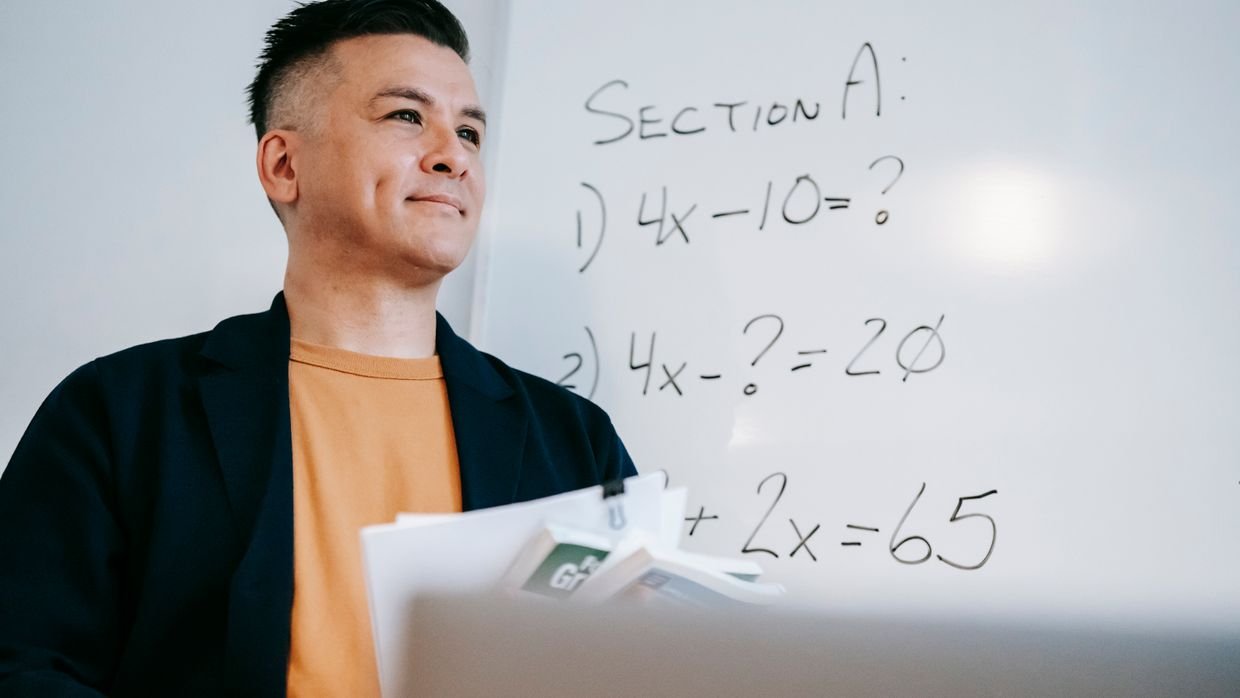
Maths worked on a board. If the teaching is someone writing and saying "and then we get this", the transcript holds very little. Useful for navigation, thin on content.
Anything not on YouTube. School platforms, Google Classroom uploads and the like are outside what this reads.
Cost and accounts
Five summaries a day, no account, no email, no card. That is the whole product rather than a trial — every depth, timestamps and export included.
Five a day covers ordinary homework comfortably. It will not cover a whole syllabus mapped the weekend before an exam, which is a planning problem rather than a limit problem.

The short version
Use it to choose which video to watch and to find things again later. Do not use it to revise from, and do not put its words in your homework.
That is a narrower recommendation than most tools will give you, and it is the one that actually holds up when you are sitting in an exam trying to produce something from memory rather than recognise it on a page.
Frequently asked questions
Is using a summarizer for homework cheating?
Using it to find and navigate sources is normal study. Submitting generated text as your own work is not. Your school's policy decides, and the honest test is whether you would show your teacher how the work was made.
Do I need an account or a parent's card?
Neither. Five summaries a day with no sign-up, no email and no payment details of any kind.
Can I revise straight from the summary?
You can, and it works far less well than it feels. Reading produces recognition, exams test recall. Write what you remember first and use the summary to check yourself.
Does it work for maths videos?
Partly. If the working is on screen and barely spoken, the transcript holds little — you get a usable map of what was covered and thin notes underneath it.
Will it cover my exam board's specification?
It summarises whatever the video contains. Comparing the chapter map against your specification is a good way to spot what a popular video leaves out, which is often the part your board asks about.
Pick the right video first
Summarize two or three candidates and watch the one that actually covers your topic.
Summarize a video — free