Guides
YouTube Video Outline Generator
A summary tells you what a video said. An outline tells you how it was built — which points were arguments and which were support.
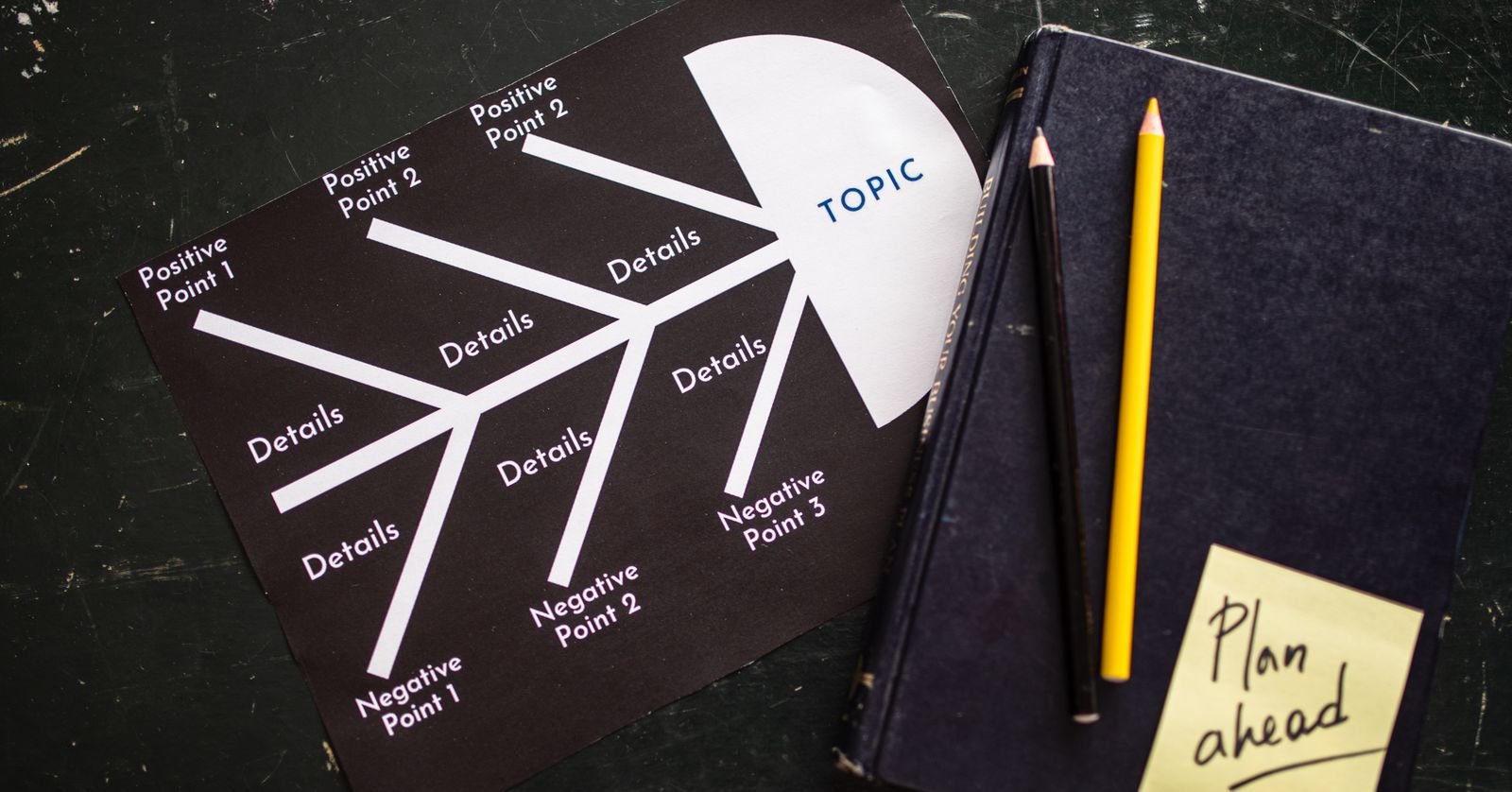
The difference between a summary and an outline is hierarchy. A summary is prose that covers the content. An outline is nested: main points with the supporting material indented underneath, so the shape of the argument is visible before you read a word of it.
That shape is genuinely useful information, and it is the part most compressed away by ordinary summarizing. Knowing that a forty-minute video makes three arguments with four examples each tells you something a flowing paragraph cannot.
What an outline shows that a summary hides
| Question | Summary | Outline |
|---|---|---|
| What did it cover? | Well | Well |
| How many main claims? | Unclear | Immediately |
| What supports what? | Lost | Visible |
| Where is the weight? | Flattened | Shown by depth |
| Quick to read? | Yes | Faster — it is scannable |
| Good for a first look | Yes | Better |
The fourth row is the interesting one. A summary gives every topic roughly equal prose, so a point the speaker spent twenty minutes on and a point they mentioned once can look the same. An outline shows the first with six sub-points underneath it and the second as a single line.

Which videos have a structure to find
An outline can only recover a hierarchy that exists. Some videos have one and some genuinely do not.
Outlines well: lectures, conference talks, structured tutorials, anything scripted, and any video whose creator wrote chapters. These were organised before they were recorded.
Outlines poorly: conversations, podcasts, reaction videos, vlogs. Not because the tool fails but because the content is associative rather than hierarchical — a three-hour conversation that circles a topic has no main points with support underneath.
For those, a timestamped summary is the right format: a sequence of moments rather than a false hierarchy imposed on something that never had one.

Depth is the signal to read
Once you have an outline, the fastest way to read it is not top to bottom. It is to look at where the nesting goes deepest.
A section with four levels underneath it is where the speaker knew the most and cared the most. A section that stops at one level is something they mentioned because the topic required it. That distribution tells you what the video is genuinely about, which is regularly not what its title claims.
This is particularly useful on videos with broad titles. "Everything about X" turns out, on inspection, to be forty minutes on one aspect of X and passing mentions of the rest — and the outline shows that in three seconds where watching would take forty minutes to reveal it.
The same reading applies in reverse when you are looking for something specific. If your topic appears as a single unindented line, the video does not cover it, and pulling the key points would have told you the same thing more slowly.

The argument-checking use
The most valuable thing an outline does is make weak reasoning visible, and it does this almost as a side effect.
When you lay out a persuasive video as a hierarchy, you can see whether the main claims have anything underneath them. A video that makes four confident assertions with one anecdote each looks very different on the page from how it sounds in your ears, where delivery and pacing carry the argument.
You also see the missing branch. An outline with three sections on why an approach works and none on when it fails is telling you something about the video, and that gap is much harder to notice while watching.
This works because an outline strips exactly what makes video persuasive — tone, confidence, momentum — and leaves the logical skeleton exposed.

Using one as a writing skeleton
If you are producing something from the video — notes, an article, a brief — the outline is a more useful starting artefact than the summary.
A summary has to be rewritten to become anything else, because it is already prose and it is prose in someone else's shape. An outline is structure with the prose left out, which is exactly what you want to fill in yourself.
The usual caution applies with more force here than elsewhere. Adopting a video's outline wholesale means publishing its structure and its emphasis under your name, and the result is recognisably derivative even when every sentence is yours. Use it to see how the material can be organised, then decide whether that organisation is the one your piece needs.

Outlines make comparison possible
The use that scales is laying several videos' outlines next to each other, which is not practical with prose summaries.
Six outlines on the same topic can be scanned in a couple of minutes, and the comparison is structural rather than textual: which sections everyone has, which only one has, and which section every video treats as the hard part.
That last one is genuinely informative. When five of six videos give the most nesting to the same sub-topic, that sub-topic is where the real difficulty in the subject lives — and it is where your attention should go, whatever the videos' titles emphasise.
Prose summaries cannot be read this way. Six paragraphs of similar-sounding text require actually reading all six, and the structural signal is exactly what the prose format destroys. Guidance on writing for the web has argued for years that readers scan structure rather than read sequentially — the W3C's writing guidance treats clear headings and structure as what makes content usable — and an outline is that principle applied to someone else's video.
What it cannot recover
A hierarchy that was never there. Applied to a rambling video, an outline produces a flat list with everything at the top level. That is an accurate report, and it is the answer to whether the video was organised.
Visual structure. If the organisation lived in a slide deck rather than in what was said, the outline will not see it. Slides remain a separate source.
Emphasis by delivery. A point made loudly and a point made in passing occupy the same space in a transcript.
Anything from a video without captions. The transcript is the input, so no captions means no outline.

Frequently asked questions
How is an outline different from a summary?
A summary is prose covering the content. An outline is nested — main points with their supporting material indented underneath — so you can see the shape of the argument and where the weight sits.
Which videos produce a good outline?
Anything organised before it was recorded: lectures, conference talks, scripted tutorials, chaptered videos. Conversations and podcasts outline poorly because the content is associative rather than hierarchical.
Why is my outline just a flat list?
Usually because the video had no hierarchy to recover. A flat outline is an accurate report that the video moved between topics without building anything on top of them.
Can I use the outline as the structure for my own article?
As a reference for how the material can be organised, yes. Adopting it wholesale publishes someone else's structure and emphasis under your name, which reads as derivative even when the words are yours.
See the shape before you commit the time
An outline tells you in thirty seconds whether a video has an argument in it.
Outline a video — free