Guides
Why Is My YouTube Summary Inaccurate?
Usually because the transcript was wrong before the summarizing started. The error you are looking at was inherited, not invented.

There are two layers, and telling them apart is the whole diagnosis. First YouTube turns speech into a caption file. Then that text becomes a summary.
An error can be introduced at either step, and the fixes are completely different. A caption error is frequently unfixable by any tool; a compression error sometimes responds to trying a different one. Most people assume the second and are looking at the first.
Diagnosing in thirty seconds
Open the video, turn on captions, go to the timestamp the summary points at, and read what YouTube itself says.
| What you find | Layer | Fixable? |
|---|---|---|
| Captions are wrong too | Transcription | No — not by any summarizer |
| Captions right, summary wrong | Compression | Sometimes — retry or another tool |
| No captions at that point | Missing input | No |
| The point was on screen | Not in scope | No — never was |
The first and last rows account for most complaints, and neither is something to switch tools over. Every summarizer in this category reads the same caption file.
What automatic captions get wrong
Predictable categories, which makes them easy to anticipate once you know them.
Proper nouns. Names, companies, products, places. Automatic captioning has no way to know a surname it has never encountered, so it substitutes something phonetically similar and the summary repeats it confidently.
Numbers. "Fifteen" and "fifty" are routinely swapped. Decimal points vanish. This is the error category with the highest cost, because a wrong figure looks exactly like a right one.
Technical vocabulary. Jargon, acronyms and field-specific terms come out as ordinary words that read plausibly and mean something else.
Anything over noise. Crosstalk, poor room audio, a question shouted from the back of a hall. Caption accuracy degrades sharply and the summary inherits the degradation without any flag.
What compression gets wrong
When the captions are right and the summary still is not, it is usually one of four things.
Dropped hedges. The most common and most consequential. "I think, though I'd want to check, maybe thirty percent" becomes "thirty percent". The speaker marked their uncertainty and the compression removed the mark.
Inverted attribution. An interviewer proposes a position to test it, the guest rejects it, and the summary records the guest holding it. This is the error that does real damage, and it is why interviews need checking before anyone is quoted.
Flattened proportion. Twenty minutes on one point and a passing aside can end up the same size on the page.
Lost sequence. A video that builds to a reversal becomes two statements presented simultaneously, which is a different argument.
The category that was never going to work
Worth separating out, because it is not an error at all and no amount of retrying helps.
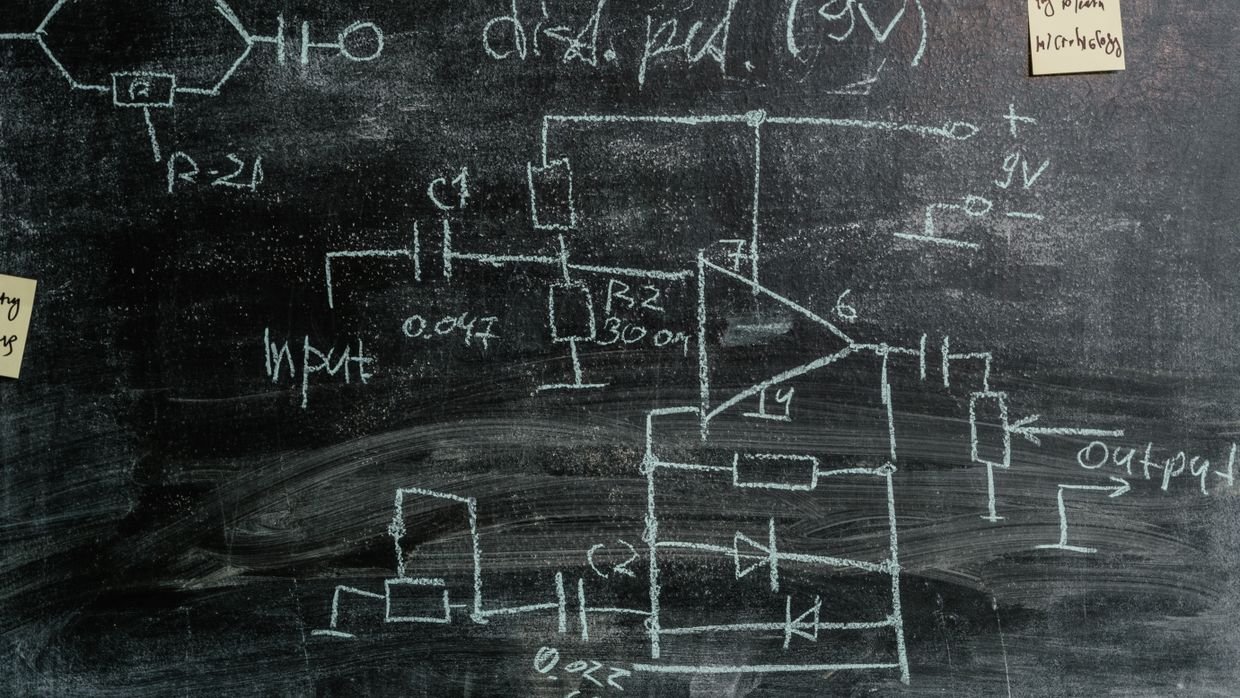
Summaries are built from what was spoken, and accessibility guidance has long treated this as a known gap — the W3C's guidance on audio description exists precisely because visual information is not conveyed by the audio track. If the video's substance was a diagram, a demonstration, code on screen, a chart, or a figure held up to camera, none of it is in the caption track. The narration says "as you can see here" and that is genuinely all there is.
A summary of such a video is not wrong. It is a faithful account of the words, which in that case were not carrying the content. Recognising this case saves you from trying four tools to solve something none of them can.
What actually helps
- Check the captions first. Thirty seconds, and it settles which layer failed.
- Look for human subtitles. Many channels publish proper subtitle tracks. Where one exists the input is dramatically better than automatic captions.
- Retry once. Output varies between runs; a badly-structured result sometimes improves.
- Open the timestamp for anything you will repeat. This is the habit that makes the whole thing safe.
- Accept the visual gap and go to the slides or the repository instead.
Step four is the one that matters. Almost every real-world problem with an inaccurate summary comes from somebody repeating a claim they did not check, and the timestamp makes checking a click.
When nothing comes back at all
Distinct from an inaccurate summary and worth separating, because the causes have nothing in common.
An inaccurate summary means the pipeline ran and produced something imperfect. No summary at all means the caption fetch failed, and that is almost always about the video rather than the tool — captions disabled, an age or region restriction, a private video, a stream still running, or an upload too recent for captions to have been generated.
The diagnostic is the same in every case: open the link in a private browsing window and check whether captions appear in the player. That reproduces what the fetch sees. The full set of failure causes is worth knowing, because the fixes differ and most of them are not retryable.

Why fluency is not a signal
The uncomfortable part, and the reason this page exists.
A summary built on misheard captions reads exactly as well as one built on perfect input. The prose is clear, the structure is sensible, nothing looks damaged. There is no visual difference between a correct summary and a confidently wrong one.
That means your sense of whether a summary is trustworthy carries no information. Judging accuracy requires either knowing the video already or checking the timestamp — which is the same conclusion reached by testing a summarizer properly.
Which is why the timestamp matters more than any other feature here. It converts an unanswerable question about trust into a ten-second lookup, and a summary without one asks you to believe it on the strength of how well it reads.

What to do about a summary you cannot trust
If the checks above leave you unsure, the fallback is straightforward and costs less than trying a fourth tool.
Read the transcript directly. YouTube exposes it, it takes far less time than watching, and it removes the compression layer entirely — you are then only exposed to caption errors rather than to caption errors plus summarizing. For a short passage you care about, this is almost always the right move.
For anything you intend to publish, quote from the audio rather than from either the transcript or the summary. Listening to thirty seconds is the only step that gives you the speaker's actual words, hedges included.
Frequently asked questions
Will a different summarizer be more accurate?
Not if the captions were wrong — every tool in this category reads the same caption file. Check YouTube's own captions at the timestamp first; if they are wrong there, no tool recovers it.
Why did it get a number wrong?
Automatic captioning confuses fifteen with fifty and drops decimal points. It is the highest-cost error category because a wrong figure is indistinguishable from a right one. Verify any number at its timestamp.
The summary says the speaker believes something they argued against.
That is inverted attribution, a compression error common in interviews where a question proposes a position the guest rejects. Open the timestamp and confirm who said what before repeating it anywhere.
Nothing about the diagram appeared in the summary.
That is expected rather than a fault. Summaries are built from spoken words, so anything only shown on screen leaves no trace. Use the slides or the linked repository for the visual content.
Check the captions before you blame the summary
Thirty seconds at the timestamp tells you which layer actually failed.
Try a video — free