How to actually study from YouTube
Watching a lecture twice is not studying. It's re-experiencing the feeling of having understood it, which is a different and much less useful thing.
There's a specific trap in learning from video, and almost everyone falls into it. You watch a lecture, it makes sense while you're watching, and you come away believing you know the material. Two weeks later you can't reproduce any of it. The lecture was clear — that's the problem. Clarity while watching is evidence that the explanation was good, not that you learned anything.
Psychologists call this the fluency illusion: we judge how well we know something by how easy it felt to take in. Video is unusually good at generating that feeling, because a competent presenter removes all the friction that would otherwise tell you where your understanding stops.
Video is unusually good at hiding the gaps
A textbook gives you constant, involuntary feedback about whether you're following. You re-read a sentence. You stop at the end of a paragraph without deciding to. Your eyes drift and the page stops making sense, which is the page telling you something. None of that exists in video. The presenter sets the pace, the argument keeps arriving whether or not you're still with it, and the moment you lose the thread looks exactly like the moment you had it.
The production values make it worse rather than better. Good editing removes the pauses where you would have caught up. Animated diagrams do the mental work of holding two things in view at once, so you never have to. A polished explanation of something difficult produces the pleasant sensation of difficulty dissolving — which is a real and enjoyable experience, and is not the same as having learned the thing.
Then autoplay moves you on before the silence in which you might have noticed any of this. An hour later you have watched four videos, understood all of them at the time, and retained approximately none of it.

Rewatching is the worst possible response
When people notice they've forgotten a lecture, the instinct is to watch it again. This is the single least efficient thing you can do. You'll sit through the eighty minutes you already knew to reach the four you didn't, and the second viewing will feel even more fluent than the first — so you'll come away even more confident and no better prepared.
What you want instead is to make the material hard to access on purpose, then practise accessing it. That's retrieval practice, and it's the most replicated finding in the study-methods literature.
Watching faster doesn't rescue the rewatch either, though it feels like a clever compromise. At 1.5x you get the same eighty redundant minutes in fifty-three, with less slack to process them in. Speed helps when you already know the material and you're scanning for a specific part — which is exactly the situation where you should be jumping to a timestamp instead of playing anything. As a substitute for understanding it just makes the illusion cheaper to produce, and the comprehension research is fairly consistent that the gains stop well before the speeds people actually use.
A method that works
Here's the sequence. It costs about fifteen minutes per lecture and replaces several hours of rewatching.
1. Watch once, properly, without notes
Taking notes during a video splits your attention between understanding and transcribing, and the transcription usually wins. Watch it once at normal speed and just follow the argument. Nothing needs to survive this step except a rough sense of the shape.
For anything past about an hour, split it rather than pushing through. Two forty-five-minute passes with the retrieval step after each one beat one ninety-minute pass by a wide margin, because the second half of a long session is where attention quietly stops paying rent. The lecture was probably delivered in one sitting; that was a scheduling constraint on the room, not a claim about how long you can usefully concentrate.
2. Get the structure out, not the words
Immediately afterwards, write down the outline of what you just watched from memory. Sections, main claims, roughly in order. This is the retrieval practice — and it's supposed to be uncomfortable, because the discomfort is what tells you where the gaps are.
This is where a chapter map earns its place. Generate one, compare it to what you wrote, and the difference between the two is your gap list. Not "I should revise this lecture" but "I lost the thread at the point where he introduces the second constraint, at 14:22".
3. Rewatch four minutes, not ninety
Now go back — but only to the timestamps on your gap list. This is the only rewatching that pays for itself. Everything else is re-reading a page you already know because it feels productive.
Watch those four minutes at normal speed, and stop the moment it lands. The temptation is to let it run on into the next section because you're already there and it's easier than deciding to stop. That's how a targeted four minutes becomes another forty.
4. Write the answer in your own words
For each gap, write an explanation as if to someone who hasn't seen the lecture. If you can't, you haven't closed it yet. Paste this next to the exported notes so future-you gets the explanation that actually worked rather than the presenter's version you initially bounced off.
5. Come back in a week
Re-derive the outline from memory again. It takes three minutes and it's worth more than an hour of rewatching. Spacing the retrieval is what moves it from "I could reproduce this today" to "I'll still have this at the exam".
The interval matters less than people think — a week is fine, two is fine, and anything you'll actually do beats the optimal schedule you won't. What matters is that the gap is long enough for retrieval to be genuinely effortful. If the outline comes back fluently, you waited too little to learn much from it, which is a good problem and means you can leave it longer next time.
Where summaries help, and where they don't
A summary is very good at one specific job: telling you where the thing you don't understand lives. It turns a ninety-minute blob into a map with labelled regions, so your attention goes to the right four minutes.
It is not good at the understanding part, and using it that way backfires badly. Reading a summary produces the same fluency illusion as watching the video, faster. If you skip straight from "I read the takeaways" to "I know this", you've optimised the wrong step — you've just found a quicker route to feeling prepared.
The test is simple. If the summary is replacing your retrieval practice, you're using it wrong. If it's telling you what to practise retrieving, you're using it right.
That distinction is easy to state and easy to drift away from, because the wrong use is so much more comfortable. Reading six takeaways feels like progress in a way that staring at a blank page trying to remember the second constraint does not. The blank page is the part that works.
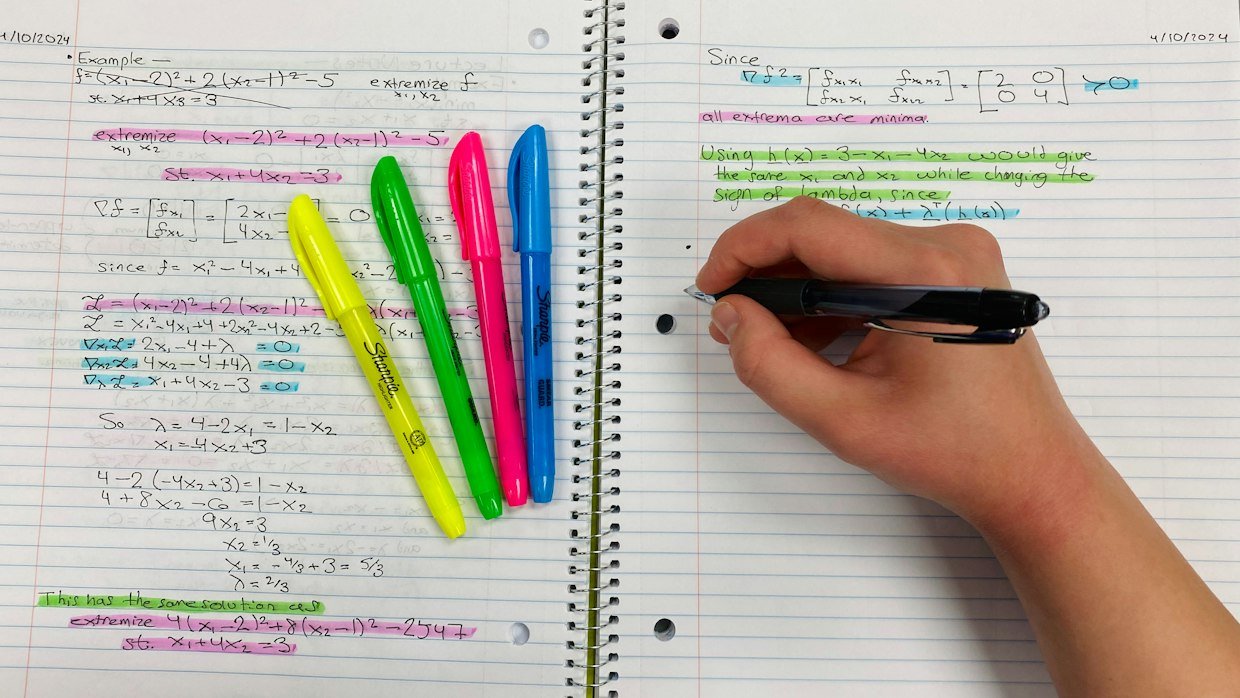
The short version
- Watch once without notes. Don't split your attention.
- Write the outline from memory. The discomfort is the point.
- Compare against a chapter map to find your actual gaps.
- Rewatch only the timestamps on that list.
- Explain each gap in your own words.
- Re-derive the outline a week later.
None of this is novel — it's standard retrieval practice applied to video. The only thing that's changed is that generating the map used to mean scrubbing through the recording with a notepad, and now it doesn't.
Try it on this week's lecture
Get the chapter map, compare it to what you remembered, and see where the gaps actually are.
Summarize a lecture — free